1. Overview of Remanufactured Engines
A remanufactured engine is not simply a repaired engine, nor is it an ordinary used engine. It is an engine product that has gone through professional disassembly, cleaning, inspection, repair, replacement of key components, reassembly, and testing.
The core purpose of engine remanufacturing is to retain qualified major components while repairing or replacing worn, aged, damaged, or unstable parts, so that the engine can be restored to a stable, reliable, and usable condition.
Compared with ordinary used engines, remanufactured engines have more controllable sources, more complete inspection procedures, and more standardized assembly processes. They are suitable for repair shops, fleets, distributors, and customers who require stable engine supply.
2. Main Process of Engine Remanufacturing
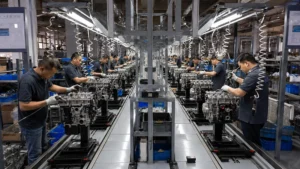
The remanufacturing process generally includes the following steps:
1. Engine Disassembly
The engine assembly is completely disassembled, and the condition of core components such as the cylinder block, cylinder head, crankshaft, connecting rods, pistons, valves, and camshaft is inspected.
2. Parts Cleaning
Oil sludge, carbon deposits, and impurities inside the engine are cleaned to ensure the accuracy of subsequent inspection and assembly.
3. Core Component Inspection
Key parts such as the cylinder block, cylinder head, crankshaft, valves, oil passages, and water passages are inspected to check for deformation, cracks, wear, water leakage, air leakage, and other potential problems.
4. Repair or Replacement of Key Components
Parts that do not meet the required standards are repaired or replaced, including piston rings, bearings, oil seals, gaskets, valve stem seals, timing components, and other wear parts.
5. Standardized Assembly
The engine is assembled according to proper assembly requirements, with strict attention to bolt torque, clearance, timing calibration, sealing treatment, and oil and water passage cleanliness.
6. Final Inspection Before Delivery
After assembly, basic inspection is carried out to confirm the engine’s operating condition, sealing performance, pressure status, and overall stability, helping to reduce the risk of after-installation problems for customers.
3. Key Quality Control Points
The quality of a remanufactured engine mainly depends on the following factors:
- Whether the cylinder block and cylinder head have been strictly inspected
- Whether core components such as the crankshaft, connecting rods, and pistons meet usage standards
- Whether valve sealing, oil seals, and gaskets are properly installed
- Whether the timing system is correctly calibrated
- Whether oil passages and water passages are clean and unobstructed
- Whether the assembly process follows standard torque requirements
- Whether necessary inspections are carried out before delivery
If these steps are not properly controlled, the engine may experience problems such as hard starting, rough idling, insufficient power, oil burning, oil leakage, water leakage, overheating, abnormal noise, or cylinder gasket failure.
Therefore, when choosing a remanufactured engine, customers should not only focus on price, but also pay attention to workmanship, inspection procedures, assembly standards, and after-sales support.
4. Our Service Advantages
We focus on engine stability and long-term cooperation with customers. We do not supply low-quality products, and we do not pass problematic engines directly to customers.
During the engine supply process, we focus on the following points:
- Strict selection of engine sources
- Attention to disassembly, inspection, cleaning, and assembly procedures
- Careful inspection of core engine components
- Pre-delivery inspection as much as possible
- Support for matching engines according to vehicle model and engine model
- Long-term supply support for repair shops, traders, and wholesale customers
We aim to provide more stable product quality, helping customers reduce repair risks, lower after-sales pressure, and improve end-user satisfaction.
5. Suitable Customers
Remanufactured engines are suitable for:
- Auto repair shops
- Engine wholesalers
- Auto parts distributors
- Export trading customers
- Fleet maintenance customers
- End users who need to control repair costs
For customers who do not want to take the quality risks of ordinary used engines but also want to reduce replacement costs, a remanufactured engine is a more stable and cost-effective choice.
6. Company Qualification Statement
Our company has long been focused on automotive engine supply, inspection, assembly, and after-sales support services. We have stable engine supply capabilities and quality control capabilities, and can provide customers with various engine products and related services for different vehicle models.
Our company is qualified for engine remanufacturing.